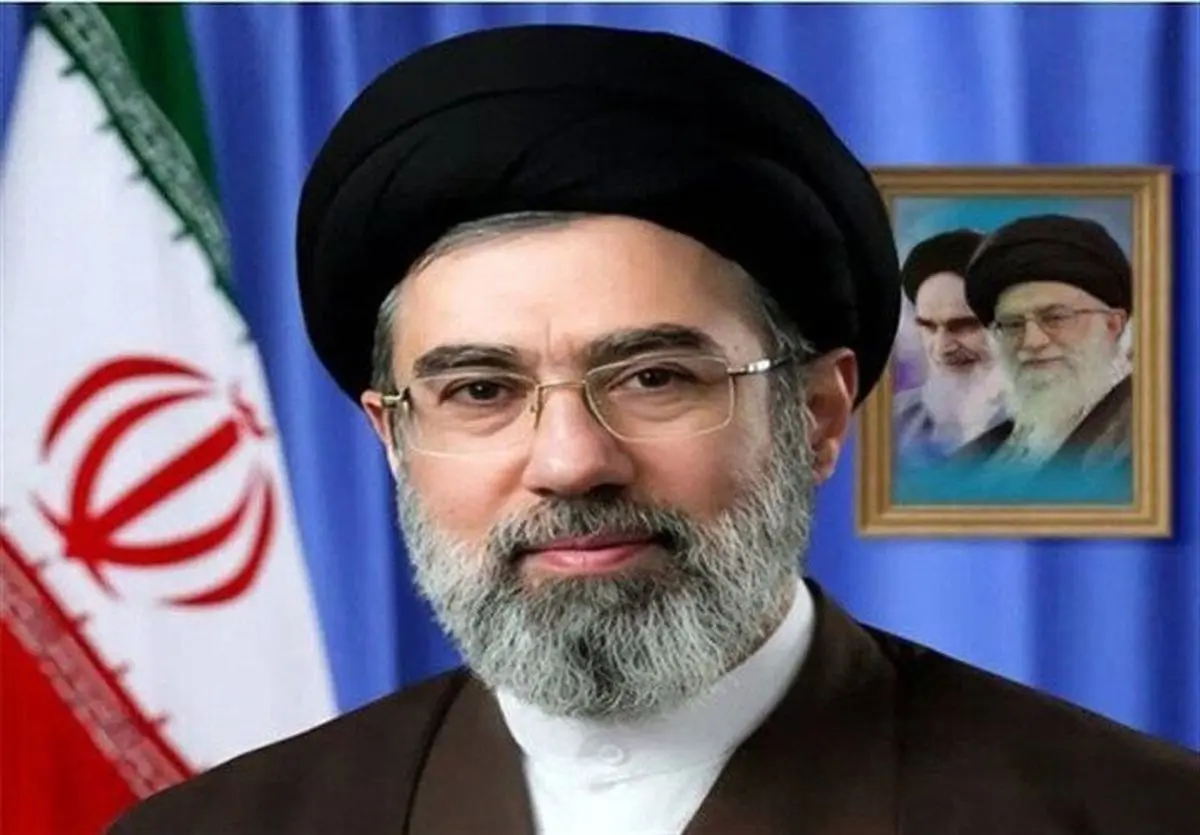
Ayatollah
Syed Mojtaba Hosaini Khamenei
Preface
From an early age, he was raised in a family distinguished by its commitment to Islamic scholarship, piety, dedication, and service to Islam. Under the guidance and mentorship of his esteemed father, he pursued advanced religious studies, spiritual refinement, and devoted himself to serving the faith and the Muslim community.
His lifelong commitment to Islamic seminaries has been reflected in his continuous engagement in teaching, academic research, and the intellectual and moral development of students. His steadfast adherence to the principles and values of the Islamic Revolution remains one of the defining characteristics of his life and work.
This page has been prepared to introduce the life, scholarly contributions, cultural and social activities, and various dimensions of the personality of Ayatollah Sayyid Mojtaba Hosseini Khamenei , enabling readers to gain a deeper understanding of his life, thought, and services.
Childhood
Childhood
Ayatollah Sayyid Mojtaba Hosseini Khamenei is the second son of the Leader of the Islamic Revolution, **Grand Ayatollah Sayyid Ali Khamenei**. He was born in **1969** in the holy city of **Mashhad, Iran**, where he spent his childhood until **1978**.
Family
Father and Grand Father
His grandfather was born in Najaf, Iraq, on 7 December 1895 and passed away on 5 July 1986. He was regarded as one of the distinguished scholars and jurists (mujtahids) of his time.
His father, the martyred Grand Ayatollah Sayyid Ali Khamenei, was born on 19 April 1939 in the holy city of Mashhad, Iran. After many years of study in the Islamic seminaries of Mashhad, Qom, and Najaf, he attained the rank of Ijtihad. From his youth, he played an active role in the movement led by Imam Khomeini against the Pahlavi regime and, because of his revolutionary activities, was arrested and exiled on several occasions.
Following the victory of the Islamic Revolution, he held numerous important positions, including membership in the Islamic Revolutionary Council, Secretary-General of the Islamic Republican Party, leadership responsibilities within the Islamic Revolutionary Guard Corps (IRGC), Friday Prayer Imam of Tehran, representative of Imam Khomeini on the Supreme Defence Council, representative of the people of Tehran in the first term of the Iranian Parliament, member of the Assembly of Experts, President of the Islamic Republic of Iran for two consecutive terms, and later Leader of the Islamic Republic of Iran.
Throughout his life, Ayatollah Khamenei consistently emphasized the values of knowledge, culture, justice, independence, the unity of the Muslim Ummah, and support for oppressed nations, particularly the Palestinian people. His books, speeches, and guidance in the religious, cultural, social, and political spheres are regarded as invaluable resources for scholars and researchers of Islamic thought.
After decades of continuous struggle, he was martyred on 28 February 2026 during what is described as a U.S. and Israeli airstrike on the Leader's residence, alongside his daughter, granddaughter, daughter-in-law, and son-in-law. Following large funeral processions in Tehran, Qom, Najaf, and Karbala, he was laid to rest on 9 July 2026 in the Dar al-Dhikr Portico of the Holy Shrine of Imam Reza (A.S.) in Mashhad.
Participation in the Iran–Iraq War
Participation in the Iran–Iraq War
He received his primary and secondary education in the educational institutions of Mashhad and Tehran, respectively. At the age of sixteen, while still a student, he joined the front lines of the Iran–Iraq War and served in the Habib ibn Mazahir Battalion of the 27th Mohammad Rasul Allah Division. He also served for a period with the Sayyid al-Shuhada Division. During the war, he took part in numerous military operations, particularly Operation Karbala-1, serving on the front lines of the battlefield.
The Unknown Mujahid
Brigadier General Sardar Ali Fazli recalled Ayatollah Sayyid Mojtaba Hosseini Khamenei's insistence on keeping his identity unknown among his fellow fighters:
"I had the honor of serving for a period in the Sayyid al-Shuhada Division alongside my esteemed brother, Agha Sayyid Mojtaba. When he was serving in the division, he instructed me to address him simply as 'Agha Hosseini,' saying, 'We are not here for recognition, prestige, or personal distinction. We are here to fulfill our religious and revolutionary duty.'"
Before joining the Sayyid al-Shuhada Division, Agha Mojtaba had also served with the 10th Division. During the time he was with the Sayyid al-Shuhada Division, we witnessed many of his outstanding qualities.
His expectations were no greater than those of the other fighters—indeed, they were often even more modest. I never saw him ask for any privilege, comfort, or facility beyond what was available to the other mujahideen. On the contrary, he was content with the simplest of provisions.
He always tried to remain wherever the danger was greatest and avoided staying in secure or comfortable locations. Regular visits to the front lines, checking on the well-being of the fighters, and maintaining a constant presence at the forward positions were among his enduring principles.
At appropriate moments, he would also share light-hearted conversations and good humor with the fighters, fostering an atmosphere of brotherhood, affection, and high morale on the battlefield.
His approach to prayer was equally distinctive. Whenever congregational prayer was not available, he preferred to perform his prayers alone and in silence. He deliberately chose deserted and dimly lit places where few people would pass by. Although many tents were available, he consistently selected the most remote ones for worship, supplication, and private communion with God. This was not an occasional practice but a regular and characteristic aspect of his life.

Another Notable Event from the Front Lines
The distinguished commander of the Sacred Defense, Martyr Brigadier General Nour Ali Shoushtari, recalled an operation in which Agha Sayyid Mojtaba and his brother were present:
"I noticed that Agha Sayyid Mojtaba seemed somewhat concerned, so I asked him what was wrong. Pointing to his eyeglasses, he replied, 'They've broken.' I said, 'Why should that worry you?' He answered, 'I'm worried that I might miss participating in this operation because it will take time to have them repaired.'
It was an exceptionally difficult operation, and there was even the possibility that some of the fighters might be captured. For that reason, only the bravest, most determined, and most self-sacrificing volunteers had been selected to take part.
I quietly instructed my companions not to repair Agha Mojtaba's glasses, hoping that the other fighters would depart first and that he and his brother would remain behind. However, while I was occupied with radio communications and other operational matters, he somehow managed to repair his glasses temporarily using a safety pin and set off for the front.
I tried my best to stop him, but I was unsuccessful, and he continued toward the battlefield.
Later, I contacted the commander of their division and said, 'The two brothers are on their way. Make sure they are not assigned to the initial assault responsible for breaking through the enemy's defensive lines.'
The following day, when I reached the operational area, I found both of them on the Qashan Heights, positioned at one of the foremost defensive posts. It was an extremely dangerous location where evacuating the wounded was exceptionally difficult, and even delivering weapons, ammunition, and food posed a major challenge.
I turned to our brother, Commander Fazli, and said, 'Mr. Fazli, these two have reached an extremely hazardous position. Their martyrdom would not be our concern, but if, God forbid, they were captured by the enemy, it would have serious propaganda consequences for us.'
He replied, 'I tried to prevent them from going last night, but they insisted on joining the front of their own free will and determination.'"

Seminary Education and Ijtihad
Seminary Education and Ijtihad
Ayatollah Sayyid Mojtaba Hosseini Khamenei began his seminary education in 1985 at the Ayatollah Mojtahedi Seminary in Tehran. In 1989, he continued his studies at the Seminary of Qom.
He completed the advanced seminary curriculum (Sutuh al-'Ulya) under the guidance of distinguished scholars, including Ayatollah Ahmadi Mianji, Ayatollah Reza Ostadi, Ayatollah Awsati, and other prominent teachers of the Hawza.
In 1992, he began attending the advanced jurisprudence (Kharij al-Fiqh) lectures on the chapter of Jihad delivered by the martyred Grand Ayatollah Sayyid Ali Khamenei. He also benefited from the advanced courses in Islamic jurisprudence and legal theory (Kharij al-Fiqh wa Usul) taught by Ayatollah Haj Sheikh Mojtaba Tehrani.
During the same period, he continued his studies in various academic disciplines and successfully completed a specialized course in the English language.
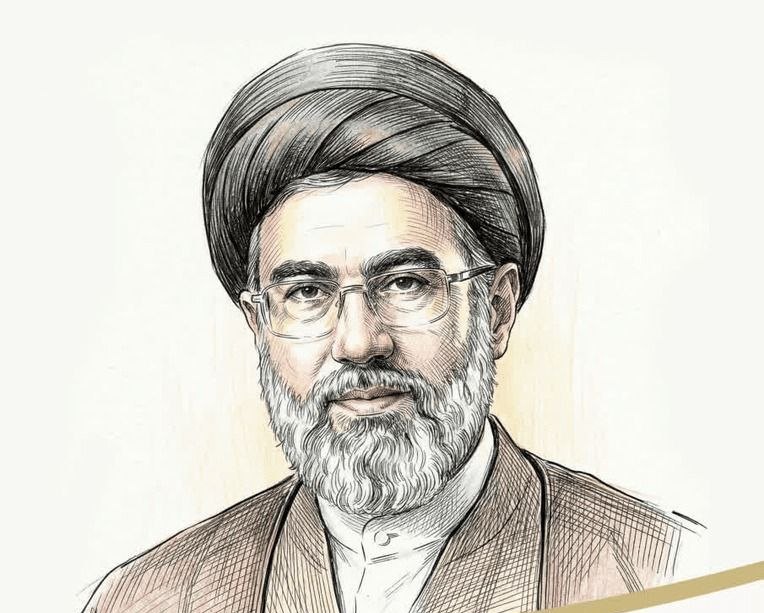
In the Company of Spiritual Masters
In 1997, Ayatollah Sayyid Mojtaba Hosseini Khamenei married the Martyred Zahra Haddad-Adel. In the same year, he returned to Qom to complete his seminary education and to further his spiritual and scholarly development. There, he spent seventeen consecutive years attending the advanced courses (Kharij al-Fiqh wa Usul) of Grand Ayatollah Hossein Vahid Khorasani, Grand Ayatollah Sheikh Javad Tabrizi, Grand Ayatollah Sayyid Musa Shubayri Zanjani, and Grand Ayatollah Sheikh Mohammad Momen Qomi.
His academic activities included preparing detailed lecture notes in Arabic, closely following and analyzing advanced seminary discussions, and engaging with leading scholars in critical dialogue, scholarly debate, and the examination of complex juristic issues. These intellectual efforts earned him the recognition and special attention of a number of the Hawza's most distinguished teachers.
His exceptional intellect, unwavering diligence, perseverance, scholarly precision, and intellectual independence led to significant and enduring contributions to the Islamic sciences, particularly in Islamic jurisprudence (Fiqh), the principles of jurisprudence (Usul al-Fiqh), and the science of narrator evaluation ('Ilm al-Rijal).
A distinctive feature of his scholarship has been his commitment to a coherent, systematic, and well-founded intellectual framework rooted in the teachings of Islam. This approach is consistently reflected throughout his research and writings, and is regarded as one of the defining characteristics of his academic work.
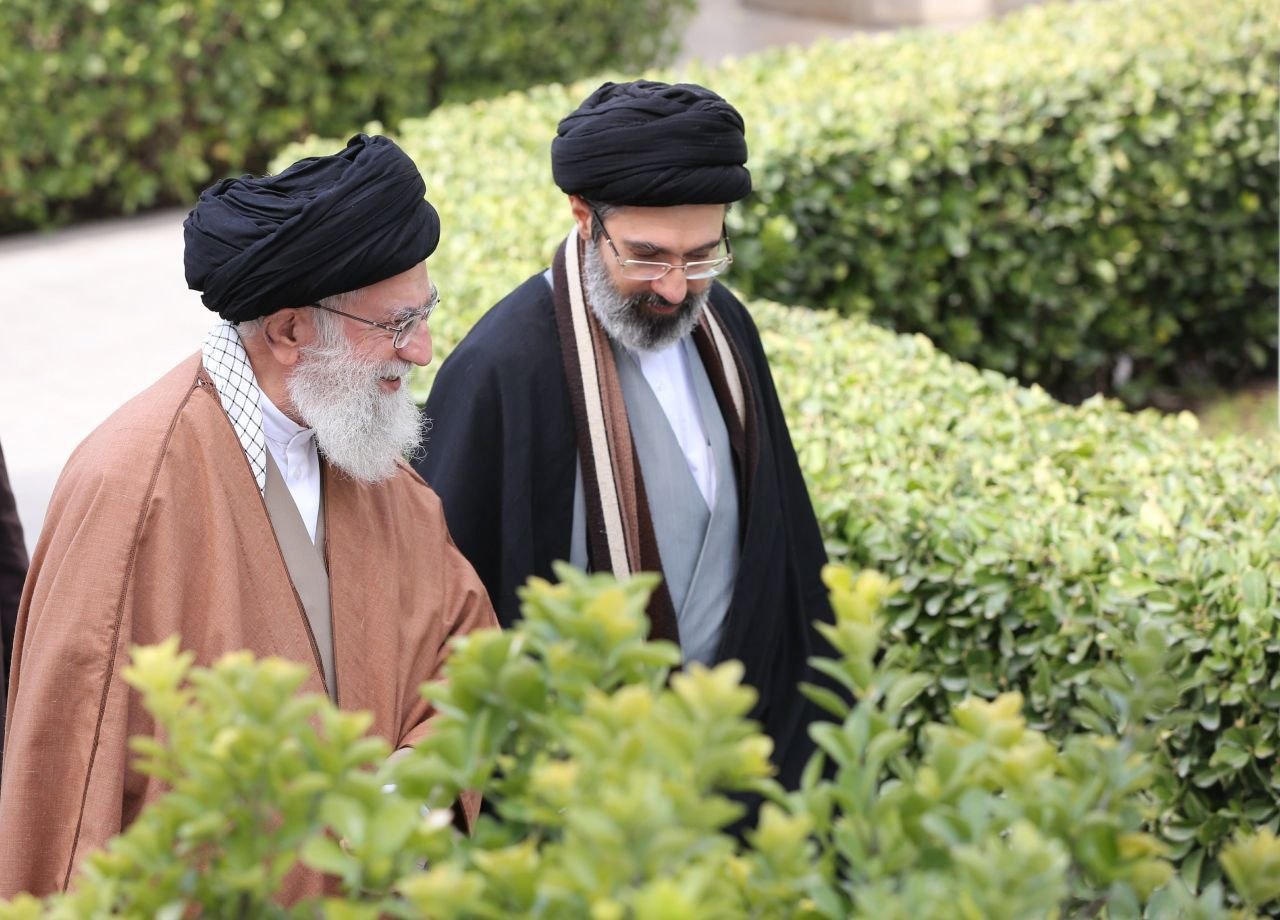
Mastery of the Schools of Islamic Jurisprudence
Ayatollah Sayyid Mojtaba Hosseini Khamenei possesses extensive expertise in the jurisprudential and legal-theoretical schools of Sheikh Murtada al-Ansari, Akhund Khurasani, Mirza Na'ini, Aqa Zia al-Iraqi, Muhaqqiq Isfahani, Imam Khomeini, Grand Ayatollahs Boroujerdi and Khoei, as well as Martyr Ayatollah Muhammad Baqir al-Sadr. This broad scholarly foundation has further strengthened and enriched the intellectual principles and legal methodologies that characterize his academic work.
A distinguishing feature of his scholarly approach is the importance he attaches to the traditions and teachings of the companions of the Infallible Imams (A.S.), the opinions of the early jurists, and, in particular, the concept of the established practice of the faithful during the era of the Infallible Imams (*Irtikaz al-Mutasharri'ah fi 'Asr al-Ma'sum*). He regards this principle as a fundamental basis for deriving Islamic legal rulings.
Another significant aspect of Ayatollah Sayyid Mojtaba Hosseini Khamenei's personality is his close association with some of the most eminent masters of Islamic ethics (*Akhlaq*) and mysticism (*Irfan*). Among them were Grand Ayatollahs Baha al-Dini, Bahjat, Kashmiri, Sheikh Ja'far Mojtahedi, and many other renowned spiritual scholars, whose companionship and guidance greatly enriched his spiritual and intellectual development.
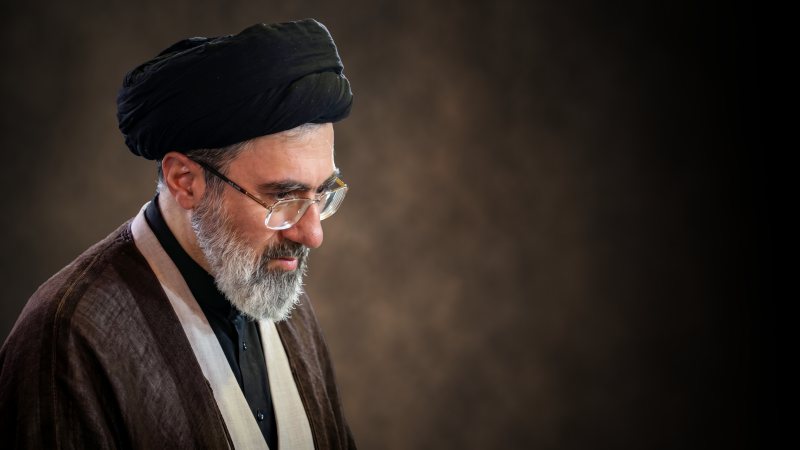
Teaching and Scholarly & Religious Activities
Ayatollah Sayyid Mojtaba Hosseini Khamenei began teaching Islamic jurisprudence (Fiqh) and the principles of jurisprudence (Usul al-Fiqh) while still pursuing his own advanced studies. He commenced his academic career by teaching introductory seminary courses at the Hawza of Tehran. Later, in accordance with the recommendation of the martyred Grand Ayatollah Sayyid Ali Khamenei that scholarly reform within the seminary was essential and that the works of Martyr Ayatollah Muhammad Baqir al-Sadr should be promoted, he discontinued teaching Ma'alim and began teaching al-Sadr's renowned Halaqat fi Usul al-Fiqh.
After moving to the holy city of Qom, he began teaching Rasa'il and al-Makasib at the House of Imam Khomeini, while also offering courses on the celebrated Halaqat series in the principles of jurisprudence. In 2007, his classes were transferred to the Feyziyeh Seminary, where his scholarly circle expanded significantly.
In 2008, he launched a specialized advanced jurisprudence course (Dars al-Kharij) on the subject of prayer (Salat) at the Office of Grand Ayatollah Sayyid Ali Khamenei in Qom. At the beginning of the 2009 academic year, in response to the requests of his students, he also inaugurated a regular public course in advanced jurisprudence.
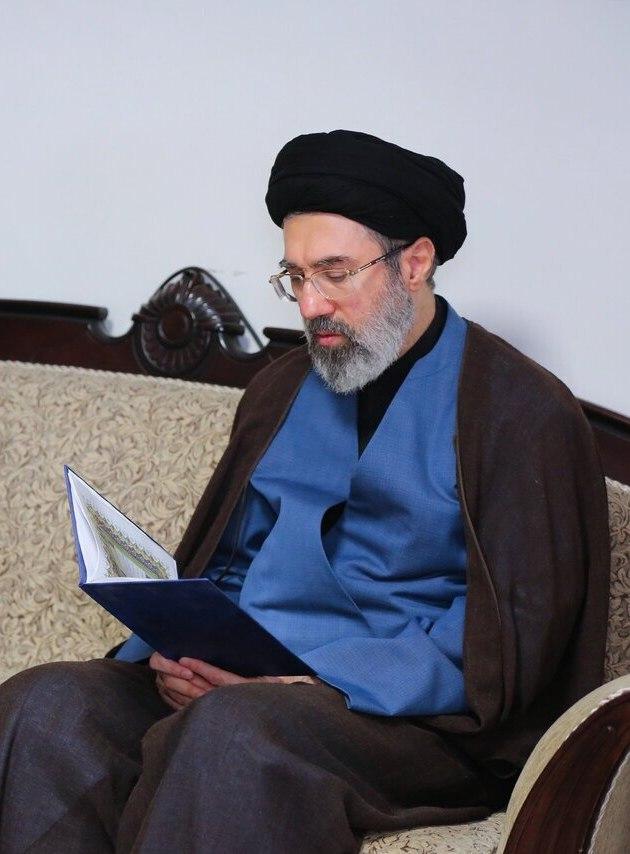
A year later, in 2010, he formally began his public advanced course in the principles of jurisprudence (Usul al-Fiqh). Starting from the opening chapters of Usul, the course continued systematically through the discussion of Istishab (the principle of continuity), reflecting his methodical and comprehensive approach to higher Islamic scholarship.
Teaching Methodology
Before delivering his lectures, Ayatollah Sayyid Mojtaba Hosseini Khamenei would carefully prepare and organize his scholarly discussions in written form. After each lesson, he would also document his research on jurisprudence (Fiqh) and the principles of jurisprudence (Usul al-Fiqh), several volumes of which have been prepared for publication.
His lectures were transcribed and compiled by a number of his students several years ago. However, in accordance with his wishes, these lecture notes have not been made publicly available. Following repeated requests from scholars and students, they have been made accessible only to a limited number of individuals and selected members of the Hawza.
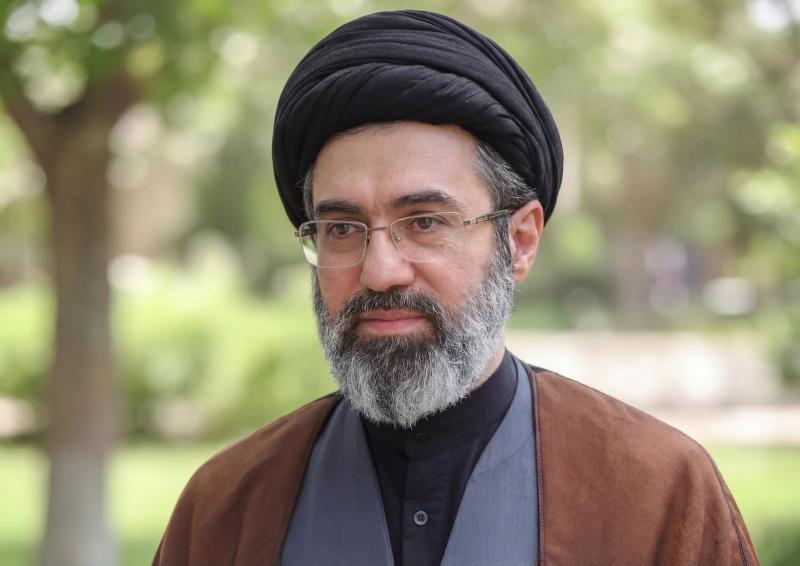
One of the defining features of his teaching methodology was his exceptional dedication to the intellectual development of his students and the importance he attached to addressing their scholarly questions. Even after formal classes had concluded, many students would continue their discussions with him through extended in-person and written consultations. He consistently responded to their questions with patience, generosity, and genuine enthusiasm.
Another distinctive aspect of his teaching was his emphasis on cultivating critical thinking, strengthening students' ability to derive independent legal rulings (*istinbat*), and providing them with practical training in the scholarly research, analysis, and presentation of jurisprudential issues.
Suspension of the Advanced Jurisprudence Courses
At the beginning of the 2022 academic year, more than 1,300 students had enrolled in Ayatollah Sayyid Mojtaba Hosseini Khamenei's advanced jurisprudence (Dars al-Kharij) course. Against this backdrop, his announcement during the very first lecture of the new academic year that the course would be suspended came as a great surprise to both his students and the other attendees.
Following this announcement, numerous efforts were made to persuade him to reconsider his decision. A group of one thousand students and teachers from the Seminary of Qom submitted a letter to the martyred Grand Ayatollah Sayyid Ali Khamenei requesting that the course be resumed. In addition, several senior scholars of Qom personally expressed the same wish.
However, during a meeting with some of his longtime students, Ayatollah Sayyid Mojtaba Hosseini Khamenei explained that the suspension of the course was due to a spiritual and deeply personal matter that could not be disclosed. He further emphasized that, in the period following the COVID-19 pandemic, many distinguished seminary teachers had seen attendance at their lectures decline significantly, while some courses had ceased altogether. Under such circumstances, he believed it was inappropriate for his own classes to continue attracting such a large number of participants. He therefore requested that all public and personal appeals for the resumption of his lectures come to an end.
On the same occasion, he advised his students:
"Encourage the students and seminarians attending my classes to benefit from the lectures of other teachers."
He further stated that an exemplary teacher must possess three essential qualities: scholarly competence, revolutionary commitment, and purity of character and soul.
Establishment of Academic and Jurisprudential Institutions
After initially expressing reluctance, Ayatollah Sayyid Mojtaba Hosseini Khamenei, at the insistence of his associates and in accordance with the guidance of the martyred Leader of the Islamic Revolution to write a commentary on Al-'Urwah al-Wuthqa, devoted his scholarly efforts to this project as well as to revising and refining his advanced lectures on Islamic jurisprudence and the principles of jurisprudence.
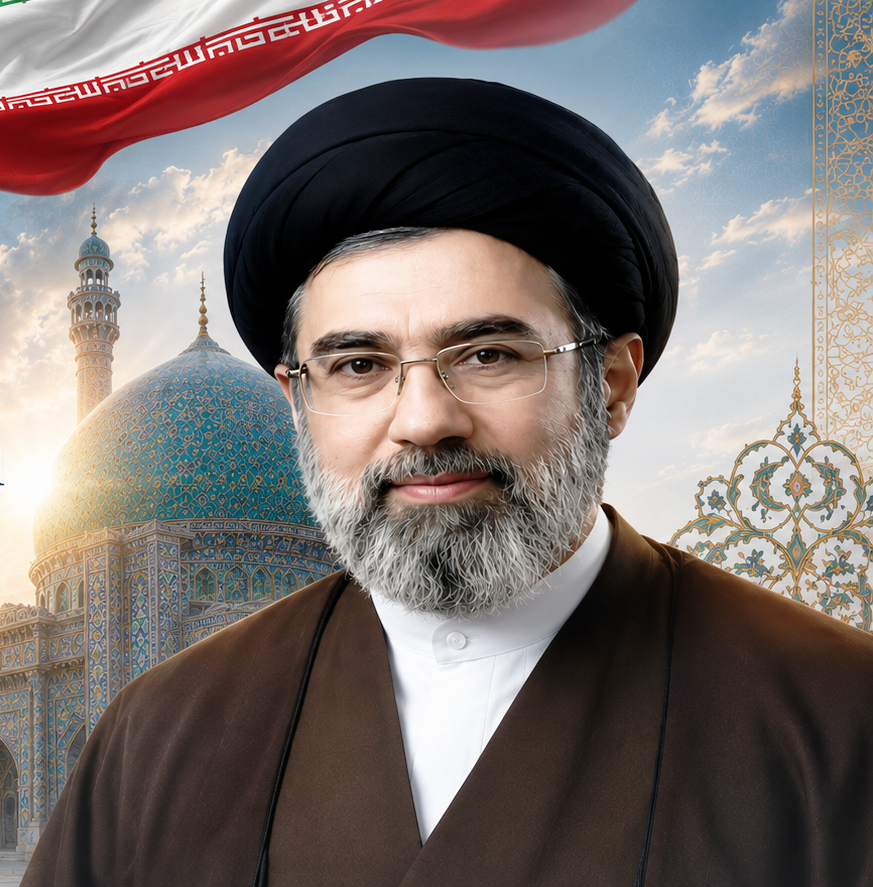
At the same time, inspired by the reform-oriented vision of the martyred Leader of the Islamic Revolution for strengthening the system of Islamic jurisprudence within the Seminary of Qom, Ayatollah Sayyid Mojtaba Hosseini Khamenei undertook the supervision of several revolutionary scholarly and jurisprudential institutions representing diverse academic interests and legal methodologies. In addition, he personally established a number of academic centers and jurisprudential seminaries dedicated to higher Islamic learning.
His deep commitment to scholarly inquiry, strong sense of social responsibility, and particular concern for serving underprivileged communities gave rise to a comprehensive educational and moral training system within these institutions. As a result, they have produced a distinguished generation of sincere, revolutionary, and socially committed believers.
One of the most remarkable aspects of Ayatollah Sayyid Mojtaba Hosseini Khamenei's character is his exceptional care to ensure that his own personality never becomes the central focus of these institutions. Instead, he has consistently emphasized strengthening the Seminary of Qom, consolidating the revolutionary seminary movement, and preserving the central role of Imam Khomeini and the martyred Grand Ayatollah Sayyid Ali Khamenei, together with their intellectual legacy. His deliberate avoidance of personal and institutional rivalries has earned him the admiration of many leading scholars. Consequently, a large number of teachers, researchers, and seminarians have shown a strong interest in and commitment to these academic centers and jurisprudential seminaries.

Ethical and Administrative Conduct
Ethical and Administrative Conduct
Ayatollah Sayyid Mojtaba Hosseini Khamenei enjoyed the special affection and attention of his esteemed father, under whose guidance he was nurtured in the virtues of ethics, spirituality, and piety. A handwritten dedication by the martyred Leader of the Islamic Revolution at the beginning of a book presented to his son reflects this special bond:
In the Name of God, the Most Exalted.
"I dedicate this valuable book to my beloved son, Mojtaba Hosseini. I pray that Almighty God may make him a source of benefit for Islam and the Muslims, guide him with His divine guidance, keep his steps firm and protect him from error, and preserve him from mistakes and shortcomings in both word and deed."
The humblest servant of God,
Ali Hosseini Khamenei
Grand Ayatollah Sayyid Ali Khamenei consistently advised his sons to remain detached from worldly comforts and material attachments. Following this guidance, Ayatollah Sayyid Mojtaba Hosseini Khamenei adopted a simple and modest life befitting a seminary student. Furthermore, throughout his years of study and teaching in Qom and Tehran, he consistently sought to remain as inconspicuous as possible, avoiding publicity, fame, and personal prominence.
Administrative Conduct
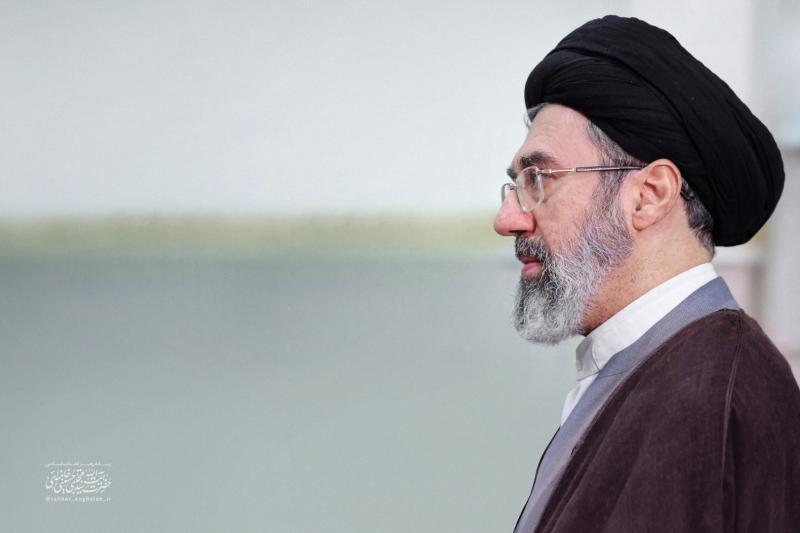
For many years, Ayatollah Sayyid Mojtaba Hosseini Khamenei carried out a variety of responsibilities in the service of Grand Ayatollah Sayyid Ali Khamenei. At times, he acted as his representative in implementing official directives, while at other times he served as a liaison between the Leader and the country's political, military, cultural, economic, and other state institutions and officials.
None of the sons of the martyred Leader of the Islamic Revolution were affiliated with any political party. Nevertheless, this did not mean that the martyred Leader refrained from benefiting from the political and social abilities of his sons—particularly those of Ayatollah Sayyid Mojtaba Hosseini Khamenei—in carrying out his leadership responsibilities.
In matters relating to the political sphere, military leadership, and senior state officials, the martyred Leader frequently relied on Ayatollah Sayyid Mojtaba Hosseini Khamenei's abilities and services. This, however, did not imply that he exercised any independent authority or intervened separately in the affairs of the state. Rather, he served as a trusted assistant and confidential aide to his father in fulfilling these responsibilities.
Through these responsibilities, Ayatollah Sayyid Mojtaba Hosseini Khamenei became closely acquainted with many of the country's political, military, and administrative affairs over a period exceeding two decades. During this time, he stood alongside his martyred father as a trusted companion, reliable confidant, and faithful adviser, witnessing many of his important decisions, appointments, and major state affairs firsthand.
Those who are closely familiar with the administrative style of the martyred Leader of the Islamic Revolution affirm that, while consistently refraining from direct involvement in the governance of the country, his son served throughout these years as an honest assistant, a trusted adviser, and a devoted servant, faithfully supporting his father in the discharge of his responsibilities.
Comprehensive Insight into Major National Affairs
A profound understanding of the nation's key affairs, close working relationships with senior government officials, participation in numerous important consultative and administrative meetings over the years, extensive study across a wide range of academic disciplines, continuous engagement with leading scholars and intellectuals, and the ability to identify sound and effective solutions to both major and minor challenges of governance have together provided Ayatollah Sayyid Mojtaba Hosseini Khamenei with a rich reservoir of intellectual knowledge and practical experience for the leadership of the Islamic Revolution.
Another significant aspect of Ayatollah Sayyid Mojtaba Hosseini Khamenei's public life has been his longstanding and close relationships with senior military commanders and the leaders of the Axis of Resistance, particularly the Martyr of the Resistance, Sayyid Hassan Nasrallah, and the martyred Commander, General Qassem Soleimani.
As a consequence of these factors, the United States and the Zionist regime have, for many years, regarded him with deep hostility. This has been manifested through sustained efforts to defame his character, target him physically, and employ various forms of verbal and practical threats in an attempt to obstruct his selection for the leadership of the Islamic system. However, by the grace and benevolence of Imam al-Mahdi (may Allah hasten his noble reappearance), all such hostile efforts have thus far failed.
Leadership of Islamic Revolution
Leadership of Islamic Revolution
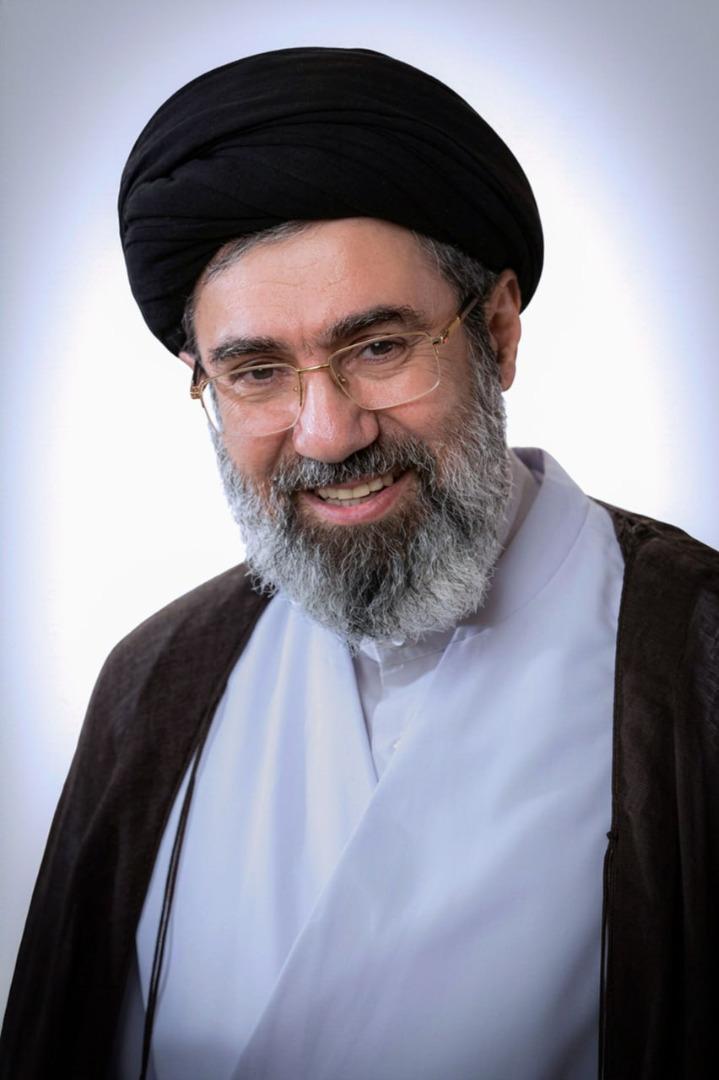
Following the martyrdom of Grand Ayatollah Sayyid Ali Hosseini Khamenei on 28 February 2026, as a result of U.S. and Israeli aerial bombardment of the Leader's residence, the Assembly of Experts elected Ayatollah Sayyid Mojtaba Hosseini Khamenei by an overwhelming majority as the third Leader of the Islamic Republic of Iran.
Upon assuming this responsibility, he emphasized the preservation of the ideals of the Islamic Revolution, the strengthening of national unity, the safeguarding of the country's independence and sovereignty, the advancement of scientific and cultural development, the promotion of social justice, and support for oppressed peoples around the world. He also called for unity, solidarity, and steadfastness, stressing that the leadership of the Islamic system would continue in accordance with the Constitution of the Islamic Republic of Iran and the principles and values of Islam.